
In the high-stakes world of B2B sales, activity does not equal accomplishment. You can make 100 cold calls, send 500 emails, and connect with 50 people on LinkedIn, but if those people do not fit your Ideal Customer Profile (ICP), you have achieved nothing but burnout.
According to our State of Sales on LinkedIn for 2026 report, the single biggest obstacle facing sales professionals today is not closing; it is starting. Sales leaders and founders globally cited “targeting the right prospects” as the top challenge.
Short answer: Target recent buyer actions—job changes, posts, tech adoption, or hiring signals. Enrich responsibly, then personalize. PhantomBuster automations help you run these workflows at scale without manual research.
Buying static lists based on company size and annual revenue rarely produces qualified pipeline today. Teams see better results when they focus on observable behaviors that signal active interest or change.
This guide explores why traditional B2B prospecting methods fail and how to build a pipeline with qualified leads using PhantomBuster.
Why traditional prospecting methods fail today
For decades, sales and marketing teams relied on the “Spray and Pray” model. You define a broad target audience—”VPs of Marketing in the UK”—and blast them with a generic sales message.
Our December 2025 survey data reveals that this approach now actively harms business growth. Respondents told us that native LinkedIn filters miss intent signals, so they augment with activity-based filters to identify prospects showing real buying behavior.
The issue is not a lack of data; it is a lack of relevant data. Many sales professionals fill their CRM with cold leads that look good on paper but have zero intent to buy. This clogs the sales funnel, wastes the sales rep’s time, and drives up customer acquisition cost.
Focus outreach on accounts showing recent buying signals. Identify prospects who are not just “fit” for your product, but “ready” for your product.
How to optimize B2B prospecting with PhantomBuster
Use PhantomBuster automations to find people who recently engaged with relevant topics, then filter by role and company fit. With PhantomBuster, you can extract LinkedIn results, enrich contacts, and filter decision-makers in one workflow.
Nathan Guillaumin, a Product Expert at PhantomBuster, explains why combining filters matters:
Sales Navigator searches tend to be more precise. You can combine filters—people who have changed jobs lately, people who posted on LinkedIn, filter based on geography—many things you cannot do on a simple LinkedIn search.
By using PhantomBuster with Sales Navigator, you can run B2B workflows that target buying signals like funding rounds, leadership changes, or engagement with competitor content.
How the “Watcher” method targets buying intent
One of the most challenging aspects of prospecting is timing. A prospect might match your ICP, but if they are not experiencing pain points, they will not buy.
Savvy sales managers are moving toward “intent-based prospecting.” Instead of targeting job titles, they target activity. Use activity-based prospecting techniques.
Using PhantomBuster’s LinkedIn Search Export automation, you can extract lists of people who have commented on specific industry posts. For example, if a thought leader posts about “The challenges of AI regulation,” commenters signal interest in that topic. Prioritize them, then qualify fit before outreach.
This gives sales reps a hook to provide tailored solutions rather than generic pitches. Respect platform limits and terms; set conservative throttles and personalize follow-ups instead of blasting at volume.
How to automate enrichment and scoring safely
Reps lose hours each week to manual research and data entry—finding emails, verifying company size, and logging details into the CRM.
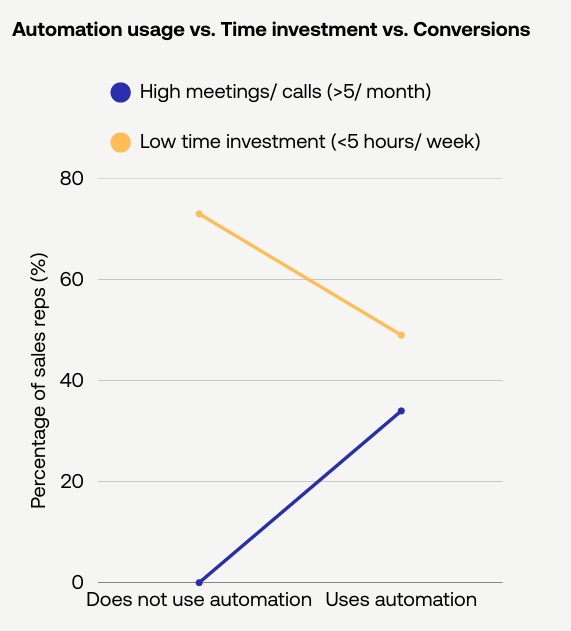
PhantomBuster automations handle the extraction and enrichment steps, so reps spend more time on conversations. By chaining PhantomBuster automations in one workflow, you can:
- Extract a list of target accounts from Sales Navigator.
- Enrich profiles to find verified professional emails (only when you have a legitimate interest; include an opt-out in outreach).
- Send enriched data to your CRM or scoring model via Zapier or API integration.
This workflow helps ensure that more sales-qualified leads enter your CRM and reduces noise. It allows sales leaders to focus their team’s energy on closing deals rather than administrative tasks.
Comparison: Static vs. workflow-driven prospecting
To understand the shift in B2B sales, compare the old methodology with workflow-driven prospecting.
| Metric | Traditional prospecting | Workflow-driven prospecting |
|---|---|---|
| Data source | Static lists / Cold directories | Live LinkedIn activity / Recent signals |
| Targeting criteria | Job title + location | Behavior + buying signals |
| Outreach volume | High volume, generic messaging | Lower volume, personalized |
| Response rates | Low (often under 2%) | Higher when targeting recent activity |
| Pipeline quality | Cluttered with cold leads | More qualified prospects |
| Risks | Wasted rep time on unqualified contacts | Requires upfront workflow design and testing |
| Outcome | High effort, low yield | Fewer unqualified contacts; more meetings per rep-hour |
How to build a multichannel workflow with PhantomBuster
Successful prospecting is rarely done on a single channel. While LinkedIn is the standard for B2B, relying solely on social selling leaves opportunities on the table.
Teams we interviewed use PhantomBuster to coordinate LinkedIn and email outreach. Once you have identified the decision-makers on LinkedIn, you can export their data to launch targeted email campaigns or even direct mail initiatives.
This keeps your brand present across channels with helpful content and case studies, increasing the likelihood of engagement.
Store consent and enrichment sources in your CRM, include unsubscribe links in all messages, and honor regional regulations like CAN-SPAM and GDPR. As data privacy regulations tighten, keeping clean records of where data came from and how prospects opted in becomes essential for sustainable pipeline growth.
Next steps to run this workflow:
- Export your ICP list from Sales Navigator using LinkedIn Search Export.
- Verify business emails using Email Discovery & Verification automations.
- Sync enriched data to your CRM and send a 3-message LinkedIn + email sequence that references recent activity or content.
Conclusion: Quality is the new quantity
The defining characteristic of prospecting effectiveness in 2026 is relevance. Companies struggle not because they cannot find people, but because they cannot find the right people.
By adopting B2B workflows with PhantomBuster automations for extraction and enrichment, you reduce time wasted on low-intent leads and increase qualified conversations. You can stop wasting time on cold calls to disinterested strangers and start building relationships with potential buyers who show real buying signals.
A steady flow of quality leads is not a matter of luck; it is a matter of better targeting.
FAQ: Refining your B2B prospecting strategies
What are the most effective B2B prospecting strategies for 2026?
Teams get better results when they warm prospects and target recent activity. Use “Social Warming” (engaging with content before connecting) and “Behavioral Targeting” (identifying leads based on buying signals like job changes or funding).
Use PhantomBuster for extraction and enrichment, then personalize messages with context from recent posts, company news, or trigger events.
How can I identify the right prospects?
Start by building a granular Ideal Customer Profile (ICP) that goes beyond demographics. Look for “trigger events” like recent hiring, funding announcements, leadership changes, or technology adoption.
Using Sales Navigator and PhantomBuster, you can filter for companies that are expanding or entering new markets. Targeting these dynamic behaviors helps you prioritize prospects more likely to have an active need.
Why is prospecting so difficult for sales teams?
Prospecting challenges usually stem from “noise.” Decision-makers are overwhelmed by generic outreach efforts, leading to low response rates. Data privacy regulations and inaccurate databases make it hard to reach qualified prospects.
Automation reduces stale data and keeps targeting aligned to recent activity, so you reach people when they are more receptive.
How does social selling improve prospecting?
Social selling transforms a cold call into a warm introduction. By engaging with a prospect’s content on social media platforms, you establish credibility and familiarity before direct outreach.
Warmed prospects—those who have seen your name or engaged with your content—are more likely to accept a connection request than cold contacts, making it a vital part of B2B sales.
Can automation help with cold calling?
Yes. While cold calls are manual, the research should not be. PhantomBuster automations can extract publicly available business phone numbers and enrich prospect data before you dial.
This gives sales reps context—recent posts, company news, job changes—turning a generic pitch into a tailored conversation. Only use publicly available business numbers, respect local Do-Not-Call rules, and log consent and outreach preferences in your CRM.
What is the difference between a lead and a prospect?
A lead is a broad contact that matches your general criteria (e.g., a name in a database). A prospect is a qualified lead that has demonstrated intent or fit and is ready to be engaged by the sales team.
PhantomBuster helps convert raw leads into qualified prospects through enrichment and scoring workflows.
How do I maintain a healthy sales pipeline?
To maintain a healthy sales pipeline, you need consistency. “Feast or famine” cycles happen when reps stop prospecting to close deals.
Schedule PhantomBuster Saved Search or Activity Watcher automations to add new prospects on a set cadence. Review results before outreach to maintain quality, but let automation run in the background so you always have fresh leads entering the funnel.
Is email still effective for B2B prospecting?
Yes, especially when combined with LinkedIn. Multichannel outreach (email + social) performs better than single-channel because it increases touchpoints without being intrusive.
Use PhantomBuster to find professional email addresses of your LinkedIn connections, then follow up via email if a prospect misses your LinkedIn message. Contact connections with clear context and an opt-out; only use business emails aligned to a legitimate interest.
Start a 14-day free trial of PhantomBuster to build workflows that prioritize quality over volume.