
Every Revenue Officer faces the same math problem at the start of the fiscal year: “How do we double revenue without doubling costs?”
Historically, the answer was simple: Hire more sales reps. If 10 reps book 50 meetings, 20 reps should book 100. But in 2026, this linear equation has broken down. The cost of customer acquisition is rising, and platforms like LinkedIn are tightening the screws on activity limits.
According to our The State of Sales on LinkedIn for 2026 report, the number one priority for growth leaders is to scale sales outreach volume. However, one of the main challenges is “Managing account restrictions and bans.”
This is the “Volume Paradox.” Sales teams need to send more messages to hit quota, but platforms restrict high-volume activity. This article explores how top-performing organizations are solving this paradox not by adding headcount, but by designing an outbound workflow that balances volume and account safety, with PhantomBuster automations handling list building, messaging, and CRM sync.
The broken model: why “more humans” can’t solve “more volume”
When you rely on humans for initial outreach, you hit a ceiling of manual effort. On most teams, we see 30–50 quality first touches per rep per day; if you push reps to 100, quality drops, subject lines become generic, and reply rates plummet.
And adding headcount to scale outreach is expensive. You’re paying salaries, benefits, and commissions for prospect research and data entry—tasks that don’t require human judgment or relationship skills.
Our report indicates that the “Group A” performers (the top 10%) have stopped hiring humans for top-of-funnel work. Instead, they’re deploying PhantomBuster automations with AI assistance for list building, research, and initial messaging, allowing human sales reps to focus entirely on closing deals and building relationships with key decision-makers.
Execution: transitioning from manual to automated top-of-funnel
- Measure your current baseline: track how many quality touches each rep completes per day for two weeks.
- Identify repeatable research tasks (title match, company size filter, recent activity scan).
- Route those repeatable tasks to PhantomBuster automations.
- Reserve human time for reviewing outputs, refining messaging, and handling replies.
- Monitor reply rate weekly; if it drops below baseline, reduce volume or increase review depth.
AI: the key to “personalized” volume
To scale outreach effectively, you must solve the quality issue. Within your outbound workflow, use PhantomBuster’s AI LinkedIn Message Writer to turn recent activity and firmographics into per-prospect hooks before scheduling sends.
- Input: The prospect’s recent post about “Supply Chain delays.”
- AI Output: A message referencing the post and offering a solution for that specific pain point.
This delivers personalized outreach at a scale that’s hard for manual teams to sustain consistently. It ensures messaging relevance while keeping a human in the loop for final review.
Execution: building an AI-assisted messaging workflow
- Export a Sales Navigator search with PhantomBuster (e.g., VPs of Supply Chain at 200–1,000 employee companies).
- Enrich profiles and remove duplicates using PhantomBuster’s data validation.
- Generate two message variants per segment with the AI LinkedIn Message Writer.
- Set daily send caps (start at 20/day) and schedule sends with variable timing.
- Review 10 sample messages each day to confirm relevance and tone.
- Auto-sync replies to your CRM for timely follow-up.
The “safe scale” protocol: how to automate while protecting account health
The concern about account restrictions is valid. LinkedIn enforces policies to limit unsolicited activity. The goal is to stay within natural activity patterns and policy limits.
To scale safely, set conservative daily caps, vary schedules, and prioritize relevance over volume. This is where PhantomBuster’s integrated safety controls help you operate predictably.
PhantomBuster’s safety toolkit: session stability, daily caps, and variable scheduling
PhantomBuster gives you three controls that work together to keep activity predictable:
Cloud-based sessions: Many extensions run in the browser context. PhantomBuster runs in the cloud, which simplifies session management and reduces local setup. PhantomBuster supports stable sessions and dedicated IP options for consistent identity management. Stable sessions reduce re-authentication interruptions and keep scheduled tasks reliable. Always follow LinkedIn’s terms and your security policies.
Configurable daily limits: High-risk behavior bunches requests into short windows; low-risk programs spread small batches over time. PhantomBuster allows you to set strict daily limits on connection requests and messages. Spread small batches across the week—start low, monitor any warnings, then adjust gradually based on account age and engagement history.
Multi-channel distribution: Don’t rely on just one channel. Relying solely on LinkedIn creates a single point of failure. A safer approach involves extracting prospect lists from LinkedIn using PhantomBuster’s Sales Navigator Search Export, enriching profiles via PhantomBuster’s email discovery and verification (or approved integrations), then syncing to your engagement platform via native connectors or webhooks—respecting consent and local regulations.
Execution: setting up a safe, multi-channel workflow
- Define your account’s safe operating range: start at 15 connection requests and 30 messages per day.
- Configure PhantomBuster to spread sends across business hours with 30–90 minute variable delays.
- Export prospects using Sales Navigator Search Export.
- Enrich with email and phone using PhantomBuster or integrated enrichment tools.
- Push enriched data to your CRM (HubSpot, Salesforce, Pipedrive) via PhantomBuster connectors.
- Run LinkedIn + email + call sequences in parallel, not all on one channel.
- Monitor account warnings weekly; if you see any flags, reduce volume by 30% for two weeks.
The data engine: syncing your sales tech stack with PhantomBuster
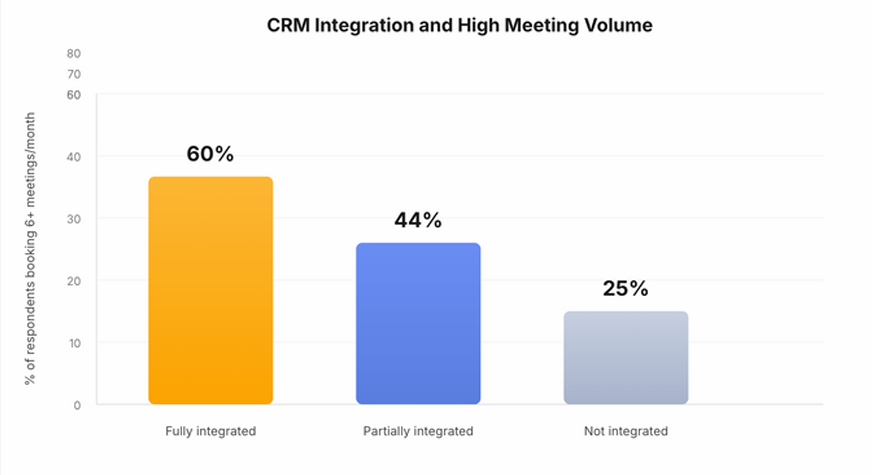
Scaling breaks when your data isn’t solid. A common failure point is the disconnect between lead generation and CRM updates.
If you’re generating 500 leads a week, you cannot manually enter them into your CRM. You need reliable integration between PhantomBuster automations and your CRM.
PhantomBuster bridges data using native connectors and webhooks. Define quality with filters—title, industry, intent signals—before pushing to HubSpot, Salesforce, or Pipedrive. This gives sales leaders pipeline and performance insights for more reliable forecasting. It turns scattered lead data into a structured pipeline.
Execution: automating your CRM sync
- Map PhantomBuster output fields to your CRM’s required fields (name, title, company, LinkedIn URL, email).
- Set up a PhantomBuster connector or webhook to push new leads to your CRM daily.
- Add validation rules: skip records missing email or with generic titles like “Consultant.”
- Tag leads by source (e.g., “Sales Nav – VP Supply Chain – Q1 2026”) for segmentation.
- Schedule a weekly data audit: check for duplicates, missing fields, and stale records.
- Review pipeline velocity monthly—measure days from lead creation to first meeting.
Conclusion: focus volume on what works
The goal of 2026 is not just to do more. It is to do more of what works.
The “volume paradox” eases when you pair relevant messaging with controlled volume and reliable data. By moving from manual outreach to AI-assisted research and cloud-based automations, you can scale outreach while reducing risk to account health and avoiding team fatigue.
Tactics that scaled in 2023 often underperform under today’s platform limits. Reassess your volume and personalization mix. Build a workflow that lets your sales reps focus on conversations, not data entry.
FAQ: Scaling sales outreach
How do I scale sales outreach without getting banned on LinkedIn?
Use a cloud solution like PhantomBuster with dedicated IP options and variable scheduling controls. Avoid running tools directly in your browser tab. Follow LinkedIn’s current limits and your account’s history—start conservative and adjust based on warnings and engagement. Prioritize personalized, relevant outreach over generic volume.
What is the most effective sales outreach strategy for 2026?
A reliable approach is multi-channel with AI-assisted research and messaging. Start by identifying potential customers on LinkedIn Sales Navigator. Use PhantomBuster automations to research signals and draft first-pass messages. Then execute a sequence that combines LinkedIn touches, emails, and cold calling to surround the prospect with value.
Can AI really write personalized cold emails?
Yes. Generative models can combine title, firmographic data, and recent posts to propose subject lines and body copy that outperform generic templates. However, for high-value leads, we recommend a “human-in-the-loop” workflow where a human quickly reviews the AI drafts before sending.
Why is CRM integration important for scaling?
As volume grows, data management becomes the limiting factor. Without reliable integration between PhantomBuster automations and your CRM (like Salesforce or HubSpot), your sales team will spend hours on manual data entry. Automation ensures consistent data flow, enabling accurate tracking and timely follow-ups throughout your sales pipeline.
What limits should I set for LinkedIn outreach?
Set conservative daily caps appropriate to your account age and role; ramp gradually and monitor warnings. Start with 15–20 connection requests and 30–40 messages per day. Consistency is more important than pushing limits. Using PhantomBuster, you can automate controlled daily activity to run in the background, so you stay consistent week to week while minimizing risk.
How do I track the success of my outreach efforts?
Track reply rate, meetings booked, and opportunity creation—not just messages sent. High volume with low reply rates can damage your sender reputation. Run two message variants per persona for one week each; keep the variant that improves reply rate by ≥3 percentage points. Use your sales engagement platform to log results and refine targeting.
Is cold calling still part of a scalable strategy?
Yes, but it should be targeted. Don’t call random numbers. Use PhantomBuster to enrich data first, then prioritize decision-makers who have shown intent (e.g., visited your profile, engaged with content). This narrows calling to accounts with recent intent signals, improving connect and meeting rates.
Start a 14-day free trial to set up a safe, multi-channel outreach workflow with PhantomBuster.